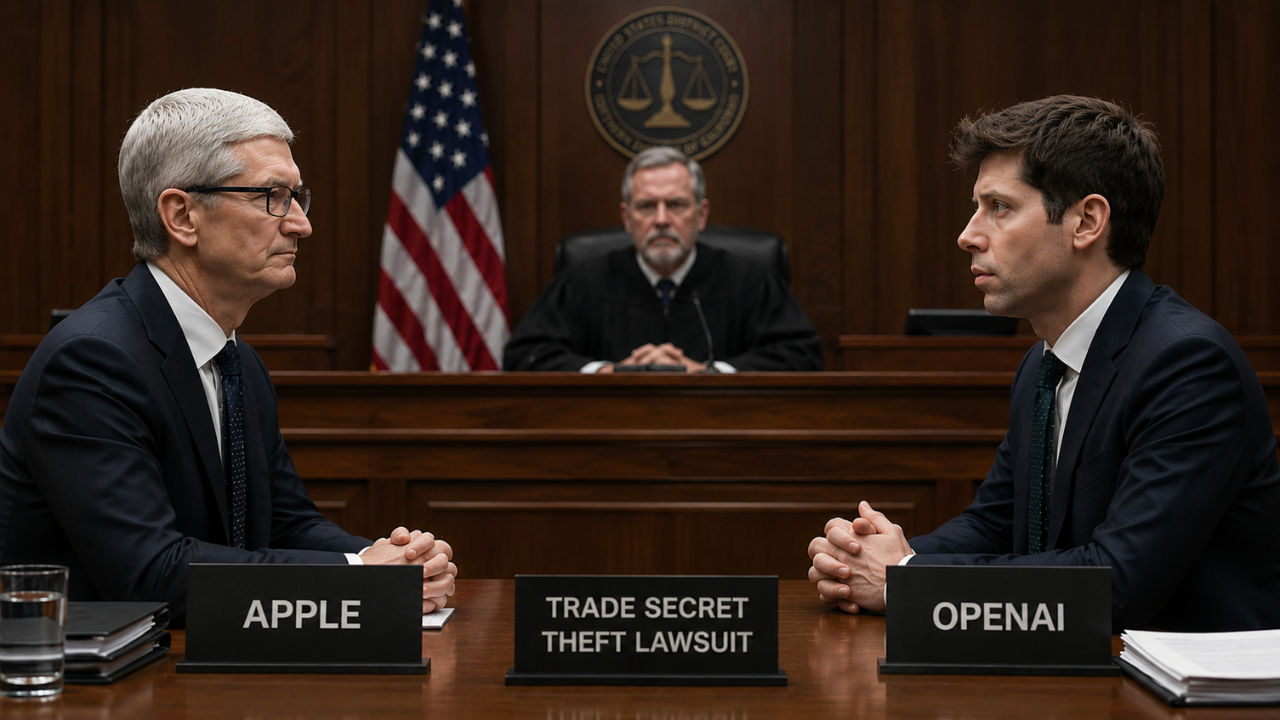
Apple trade secret theft lawsuit threatens OpenAI's iPhone rival plans: Report
Essential brief
Apple's recent trade secret lawsuit against OpenAI is impacting the AI company's efforts to develop a hardware device competing with the iPhone. The legal dispute, which alleges OpenAI sought confi
Key topics
Key facts
Highlights
Why it matters
This lawsuit highlights the complexities tech companies face when recruiting talent from competitors and developing new hardware products. The case could set precedents on how trade secrets are protected and impact innovation timelines in the AI and consumer electronics sectors. It also underscores the strategic importance of employee retention and supplier relationships in maintaining competitive advantages.
OpenAI's ambition to create a hardware device rivaling the iPhone is encountering obstacles due to a trade secret lawsuit filed by Apple. The lawsuit accuses OpenAI of attempting to acquire confidential information about unreleased Apple products through former employees and potential hires. Apple also alleges that OpenAI instructed employees on how to bypass security protocols during exit interviews. Apple seeks to halt these practices, demand destruction of any confidential materials obtained, and pursue damages.
OpenAI has denied any interest in competitors' confidential information. However, the lawsuit is already affecting OpenAI's ability to recruit experienced Apple engineers, with over 400 former Apple employees currently working at OpenAI, including former Apple design chief Jony Ive and several from Apple's iPhone product design team. Apple has reportedly responded by offering larger retention bonuses and involving senior executives to retain key staff.
The legal dispute is influencing OpenAI's hardware development approach. Former Apple employees at OpenAI may exercise increased caution when discussing prior work, and OpenAI managers might avoid detailed technical inquiries that could involve Apple's confidential data. Additionally, suppliers with strong ties to Apple, particularly in Asia, may be hesitant to collaborate closely with OpenAI to protect their existing business relationships.
Bloomberg Intelligence suggests Apple may secure targeted preliminary relief related to OpenAI's device efforts. If Apple proves its trade secrets were used, OpenAI might be required to redesign its products. Despite these challenges, OpenAI reportedly plans to announce its first hardware product this year and aims for a 2027 release, though this timeline could be subject to change due to the ongoing lawsuit.
Key topics in this update include apple trade secret theft lawsuit threatens openai, apple trade secret, and threatens openai.