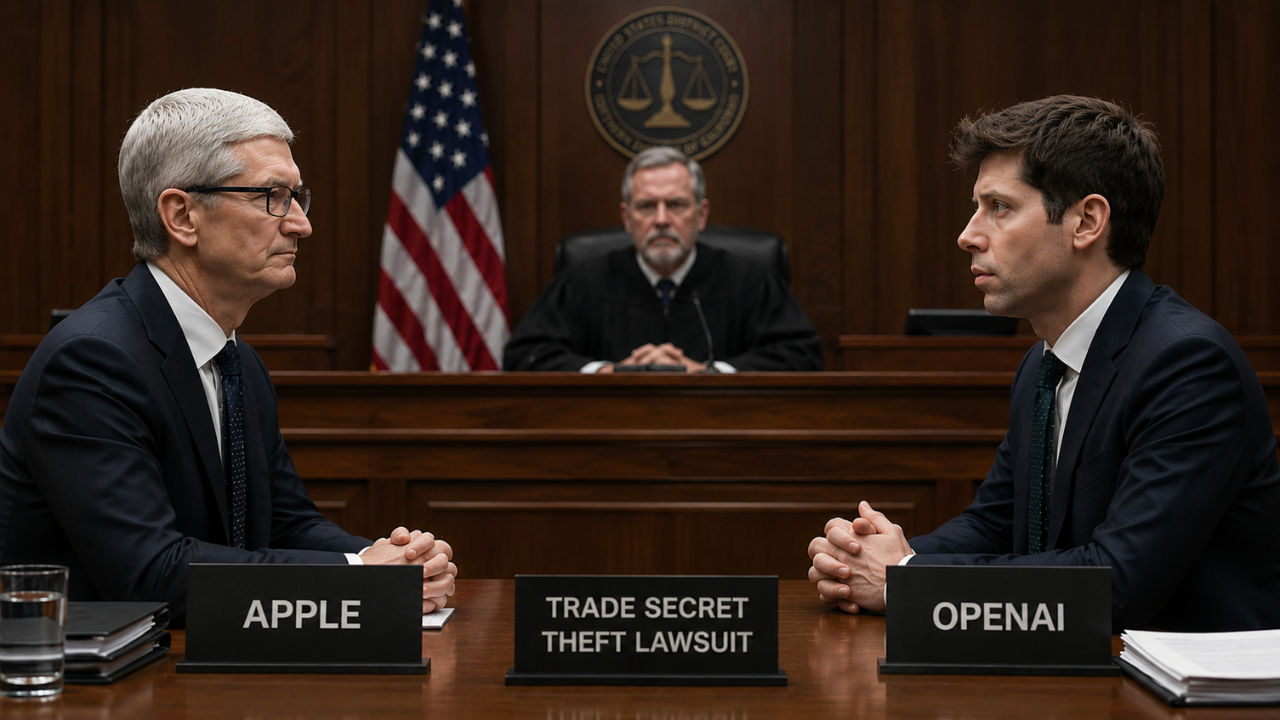
Apple vs OpenAI trade secret theft lawsuit: Full story in 5 points
Essential brief
Apple has filed a lawsuit accusing OpenAI of encouraging its employees to share confidential information about upcoming products. The complaint alleges that OpenAI obtained trade secrets through fo
Key topics
Key facts
Highlights
Why it matters
This lawsuit underscores the increasing legal scrutiny surrounding intellectual property and trade secrets in the competitive AI and tech industries. It highlights the challenges companies face in protecting proprietary information amid talent mobility and collaboration. The outcome could influence how tech firms manage employee transitions and safeguard confidential data in the future.
Apple has initiated legal action against OpenAI, accusing the AI company of stealing trade secrets related to its upcoming products. The lawsuit claims that OpenAI encouraged Apple employees to share confidential information, including drawings and technical data. This marks a significant shift in the relationship between the two companies, which have collaborated on AI features in recent years.
According to the complaint, more than 400 former Apple employees now work at OpenAI. Apple alleges that OpenAI’s efforts to acquire confidential information were coordinated across various levels, including its technical staff and chief hardware officer. The lawsuit specifically names OpenAI’s chief hardware officer, Tang Tan, who previously served as Apple’s vice president of product design and contributed to products like the iPhone, Apple Watch, and AirPods.
Apple claims that Tan encouraged Apple employees to discuss unreleased products during job interviews, facilitating the transfer of sensitive information. The lawsuit also names former Apple hardware engineer Chang Liu, who joined OpenAI in January. Apple alleges Liu accessed and downloaded numerous confidential hardware files over several weeks while working on OpenAI hardware development.
Additionally, Apple asserts that OpenAI coached departing employees on how to leave without disclosing their next employer, allowing them to retain access to confidential information longer. Apple seeks to halt these practices, demands the destruction of any Apple-owned confidential materials, and requests that OpenAI redesign upcoming products if they incorporate Apple’s technology.
OpenAI has denied all allegations, stating it has no interest in other companies’ trade secrets and remains focused on developing innovative technology. The company’s director of strategic communications emphasized this position in a public response on social media.
Key topics in this update include apple, openai trade secret theft lawsuit full story, and openai trade secret.