Carnegie Mellon researchers build open-source software to move AI between robots
Essential brief
Carnegie Mellon University researchers have created Robot I/O, an open-source framework that significantly reduces robot setup time to just two hours. This tool enables researchers to reuse modular
Key topics
Key facts
Highlights
Why it matters
Robot I/O addresses a key bottleneck in robotics research by enabling faster and easier transfer of AI software between different robots. This advancement can accelerate innovation and reduce development costs in robotics, benefiting both academic research and practical applications. The open-source approach also promotes collaboration and standardization in the robotics community.
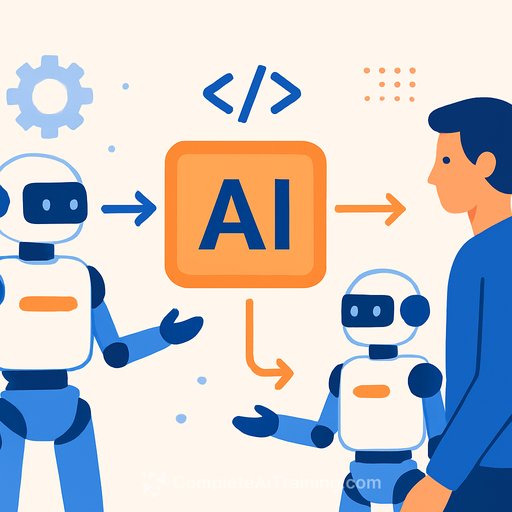
Carnegie Mellon University researchers have introduced Robot I/O, an open-source software framework designed to facilitate the transfer of AI capabilities between different robotic platforms. This framework addresses a common challenge in robotics research: the time-consuming process of adapting AI software to new hardware. By modularizing code and standardizing interfaces, Robot I/O allows AI models and control algorithms to be reused across multiple robots without extensive reconfiguration.
The framework reduces robot setup time to approximately two hours, a significant improvement compared to traditional methods that often require days or weeks. This efficiency gain enables researchers to focus more on developing AI functionalities rather than on hardware integration.
Robot I/O supports a variety of robotic hardware, making it versatile for different research applications. Its open-source nature encourages collaboration and continuous improvement within the robotics community, fostering innovation and shared progress.
By simplifying the process of moving AI between robots, Robot I/O helps accelerate experimentation and deployment in robotics research. This can lead to faster advancements in autonomous systems, robotic manipulation, and other AI-driven robotic tasks.
The framework's modular design also promotes scalability, allowing researchers to build complex AI systems that can adapt to evolving hardware configurations without extensive redevelopment. This adaptability is crucial as robotics technology continues to diversify and advance rapidly.
Key topics in this update include carnegie mellon researchers build open-source software, carnegie mellon researchers, and open-source software.