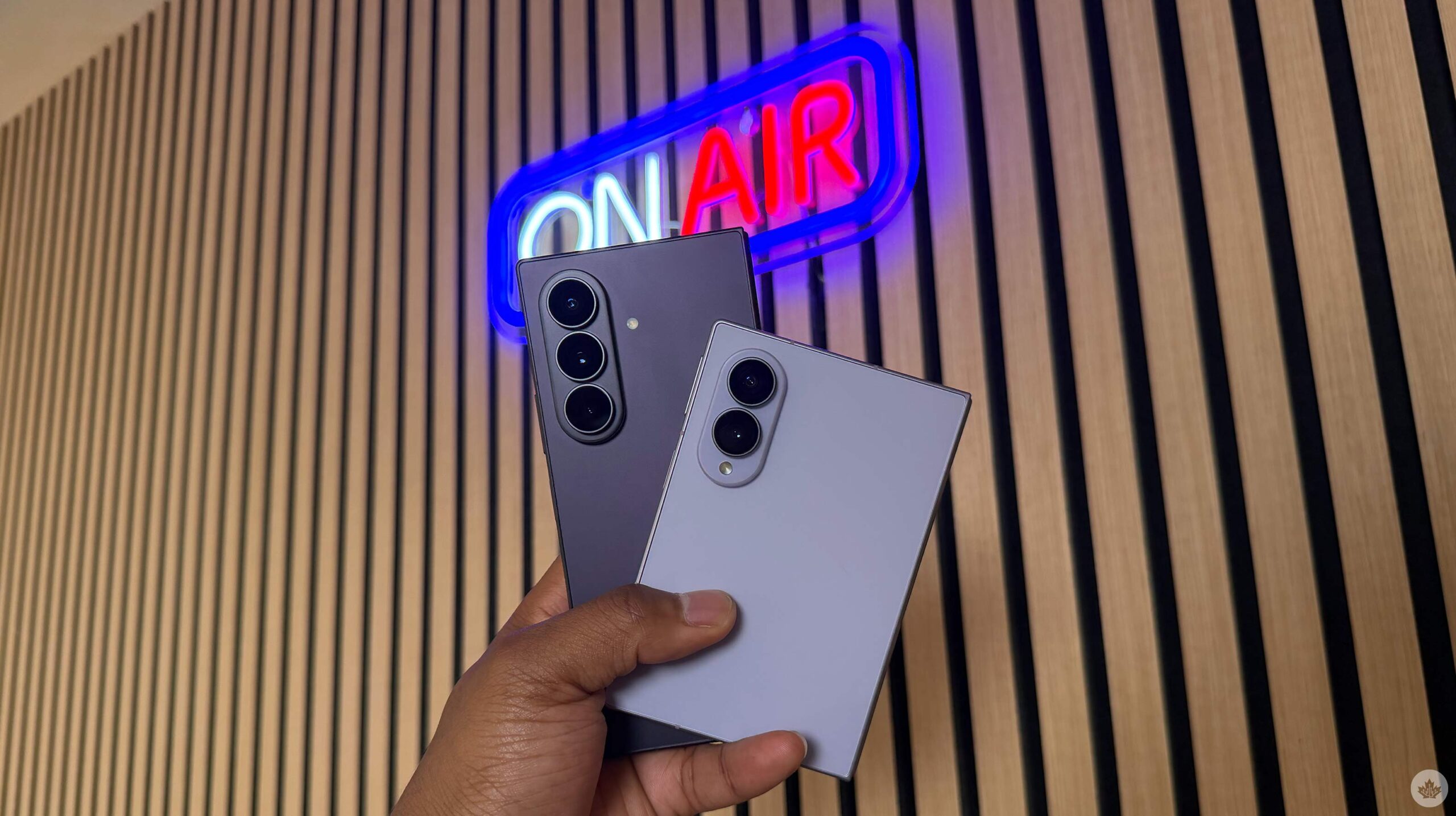
Here's how Samsung's newest foldables stack up to previous models
Essential brief
Samsung has introduced the Galaxy Z Fold 8 and Z Fold 8 Ultra, expanding its foldable lineup with two new models. These devices feature updated display sizes, improved cameras, and the latest Snapd
Key topics
Key facts
Highlights
Why it matters
Samsung’s introduction of two distinct Fold 8 models reflects a strategic shift in its foldable smartphone lineup, offering consumers more choices in size and features. The updated displays, enhanced camera systems, and upgraded processors demonstrate Samsung’s commitment to advancing foldable technology. These developments may influence market competition and consumer adoption of foldable devices.
Samsung recently unveiled the Galaxy Z Fold 8 and Z Fold 8 Ultra, marking a significant update to its foldable smartphone lineup. Unlike the previous generation, which featured only one Fold model, Samsung now offers two distinct Fold 8 devices. The Z Fold 8 introduces a wider foldable form factor, while the Z Fold 8 Ultra serves as a more direct successor to last year’s Z Fold 7.
In terms of display, the Fold 8 features a 7.6-inch AMOLED inner screen and a 5.5-inch AMOLED cover screen, both supporting up to 120Hz refresh rates. The Fold 8 Ultra offers an 8-inch AMOLED inner display and a larger 6.5-inch AMOLED cover screen, also at 120Hz. Both models use Dynamic AMOLED 2X technology for the cover screens, with the Ultra model boasting an Infinity Flex Display with a resolution of 2176 x 1812 pixels on the main screen.
Internally, both Fold 8 devices are powered by the Snapdragon 8 Elite Gen 5 for Galaxy chipset paired with 12GB of RAM, an upgrade from the Snapdragon 8 Elite found in the Fold 7. Storage starts at 256GB for all models. The Fold 8 Ultra maintains a camera setup similar to the Fold 7 but replaces the 12MP ultrawide camera with a 50MP ultrawide sensor. The Fold 8 swaps the 200MP wide camera found on the Fold 7 and Ultra for dual 50MP wide and ultrawide cameras. All models include a 10MP front-facing camera.
Regarding dimensions, the Fold 8 measures 161.4 x 123.9 x 4.5 mm unfolded and 81.9 x 123.9 x 9.7 mm folded, while the Fold 8 Ultra is slightly more compact at 158.4 x 143.2 x 4.1 mm unfolded and 158.4 x 72.8 x 8.9 mm folded. Both devices weigh over 200 grams and include side-mounted fingerprint sensors along with standard sensors such as accelerometer, gyroscope, proximity, and compass.
For the Galaxy Z Flip 8, changes from the Flip 7 series are minimal. The most notable update is the switch back to a Snapdragon processor from the Exynos chip used in the Flip 7. The Flip 8 is also slightly lighter but retains similar display sizes, camera hardware, memory, and storage options as its predecessor.
Key topics in this update include here, samsung, and newest foldables stack.