Solution to Feynman's reverse sprinkler puzzle also applies to "silly sprinklers"
Essential brief
A recent study has confirmed the 2024 momentum flux theory explaining the rotation of Feynman's reverse sprinkler. This theory clarifies how the angular momentum of water flows causes the sprinkler
Key topics
Key facts
Highlights
Why it matters
This study resolves a decades-old physics puzzle by confirming the role of angular momentum in the rotation of reverse sprinklers. Understanding these fluid dynamics principles enhances knowledge applicable to engineering and fluid machinery design. The findings also unify explanations for similar devices, broadening their relevance in physics and applied sciences.
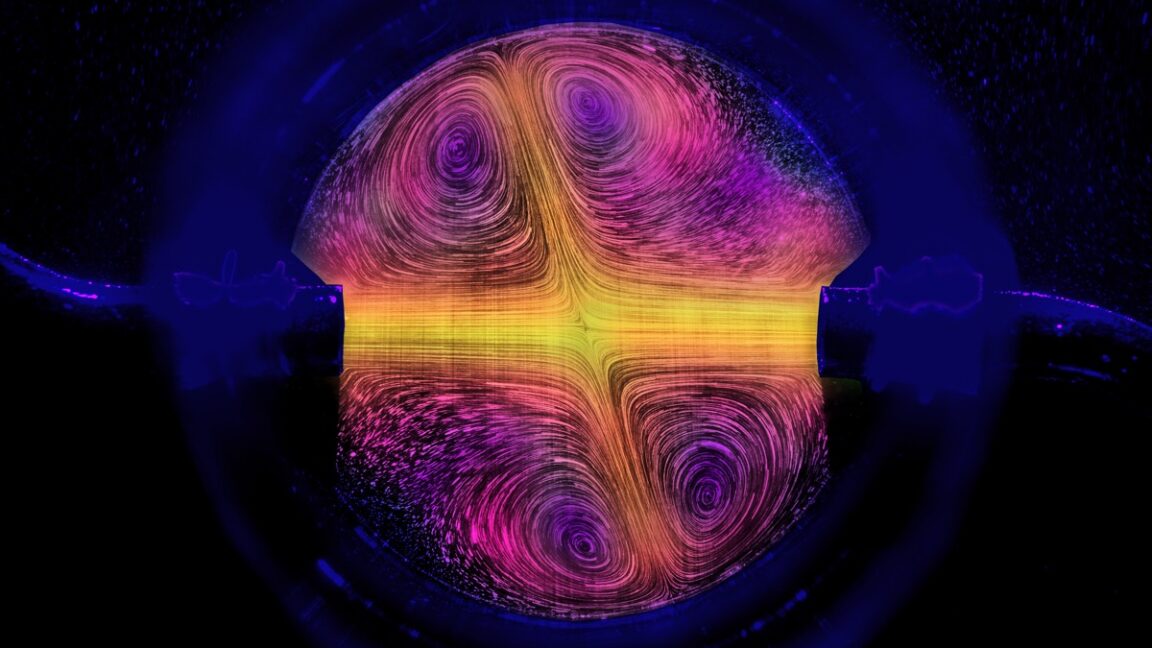
The longstanding puzzle of Feynman's reverse sprinkler, which involves the unexpected rotation of a sprinkler when water flows inward rather than outward, has been addressed by a new study. This research confirms the 2024 momentum flux theory, which attributes the sprinkler's rotation to the angular momentum carried by the water flow. According to the theory, the direction and magnitude of the sprinkler's rotation depend on the momentum transfer from the fluid to the sprinkler arms.
The study not only validates this explanation but also extends its application to devices referred to as "silly sprinklers." These are similar systems where fluid dynamics and angular momentum interactions produce comparable rotational effects. By analyzing these systems under the same theoretical framework, the research provides a unified understanding of how fluid momentum influences rotational motion in various sprinkler configurations.
This confirmation resolves a debate that has persisted since the original reverse sprinkler experiments conducted by physicist Richard Feynman. The momentum flux theory offers a clear and consistent explanation that aligns with observed behaviors in both traditional and reverse sprinkler setups.
The implications of this research reach beyond academic curiosity, as understanding the principles governing fluid-induced rotation can inform the design of fluid machinery and devices that rely on controlled rotational motion. The study's findings contribute to the broader field of fluid mechanics and rotational dynamics, offering insights that may impact engineering and physics education.
Overall, the research solidifies the role of angular momentum transfer in the behavior of reverse sprinklers and related systems, providing a comprehensive explanation for phenomena that have puzzled scientists for decades.
Key topics in this update include solution, feynman, and reverse sprinkler puzzle.