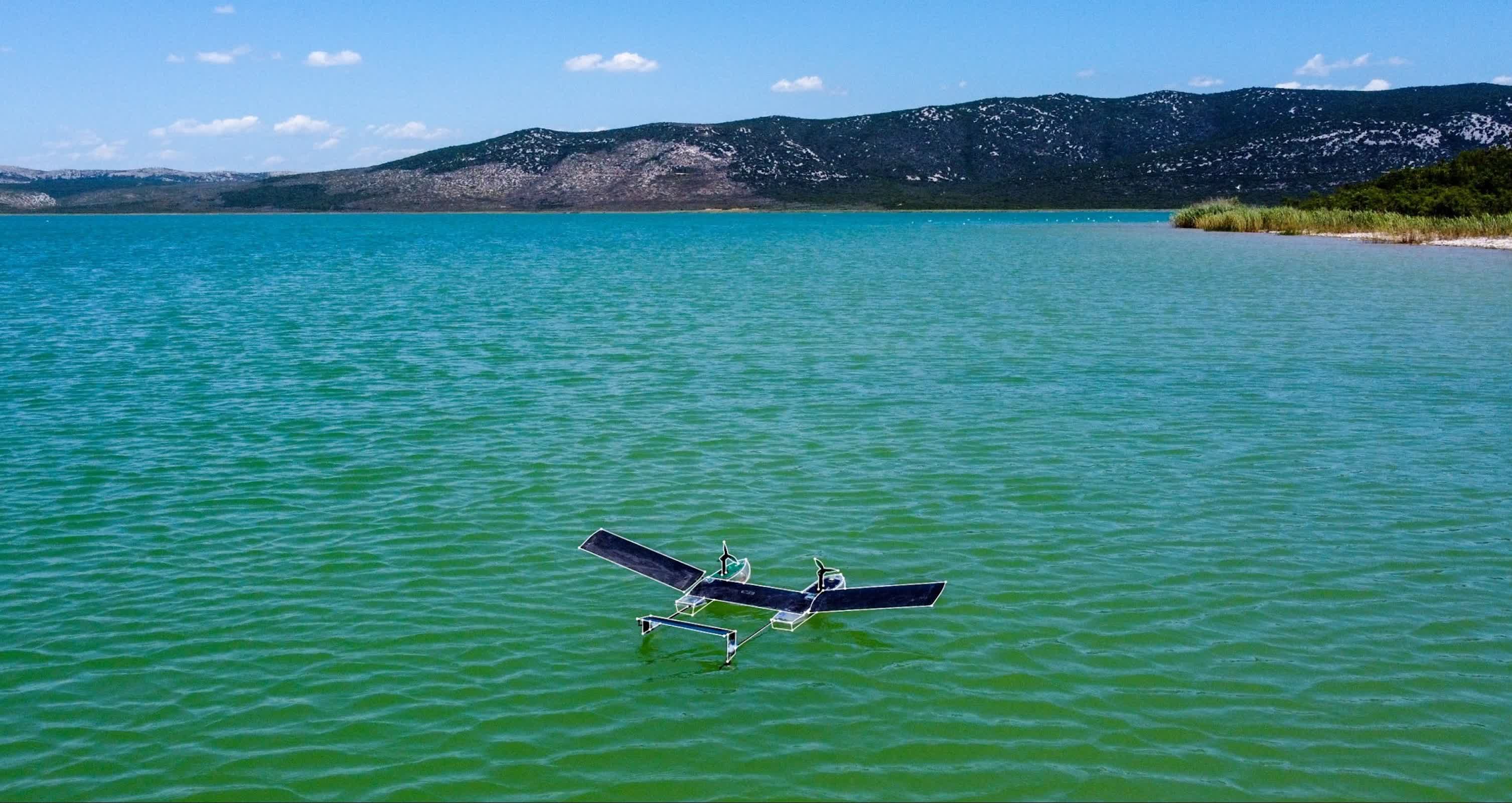
This MIT robot flies through the air then dives underwater using the same wings
Essential brief
MIT has created a robot capable of flying through the air and diving underwater using the same set of wings, inspired by seabirds like puffins. This innovation addresses the challenge of designing
Key topics
Key facts
Highlights
Why it matters
This development bridges the gap between aerial and underwater robotics by enabling a single system to operate effectively in both environments. It opens new possibilities for versatile robots that can perform complex tasks across air and water, enhancing capabilities in exploration, monitoring, and rescue operations. The bio-inspired approach also advances the integration of natural mechanics into robotic design.
Researchers at MIT have developed a robotic system that can both fly through the air and dive underwater using the same wings. This design draws inspiration from diving seabirds such as puffins, which use their wings to navigate efficiently in two very different environments. The challenge lies in the contrasting behaviors of air and water, which require wings to adapt to different fluid dynamics for effective movement.
The robot's wings are engineered to operate in both mediums without compromising performance significantly. This dual-function capability is notable because air and water have vastly different densities and resistances, making it difficult for a single wing design to perform well in both. The MIT team addressed this by creating a wing structure that can adjust its shape and movement to suit the environment.
This technology could have practical applications in areas such as environmental monitoring, underwater exploration, and search and rescue missions where transitioning between air and water is necessary. The robot's ability to seamlessly switch between flying and diving modes enhances its versatility and operational range.
The development also contributes to the field of bio-inspired robotics, where natural organisms provide models for engineering solutions. By mimicking the wing mechanics of seabirds, the MIT robot demonstrates how biological principles can inform advanced robotic designs.
Future research may focus on improving the efficiency and control of such robots, enabling longer missions and more complex tasks in diverse environments. This innovation represents a step forward in creating adaptable robotic systems capable of multi-environment navigation.
Key topics in this update include robot flies, dives underwater using, and same wings.