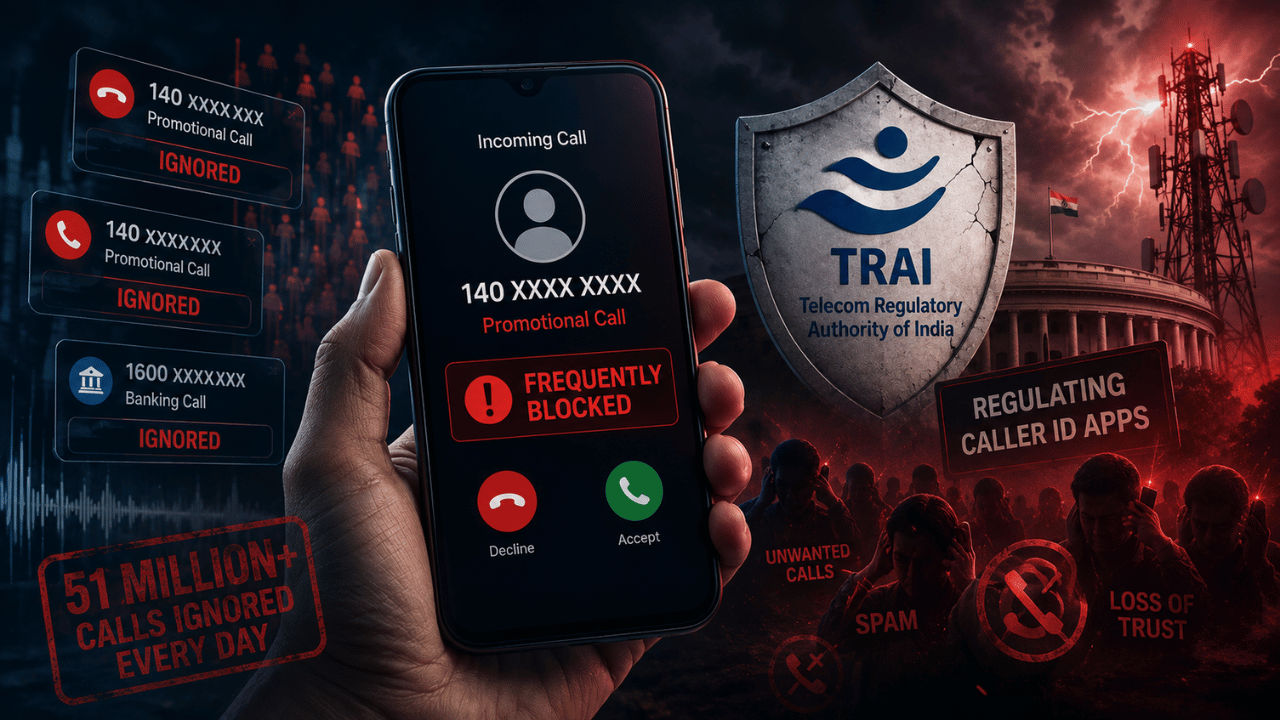
ட்ரூகாலர்க்கு TRAI யின் அதிரடி கேள்வி 1600 நம்பரிலிருந்து வரும் காலை ஸ்பேமில் சேர்ப்பது ஏன்
Essential brief
The Telecom Regulatory Authority of India (TRAI) has sought permission from the Ministry of Information Technology to take action against calling management apps like Truecaller. TRAI has prepared
Key topics
Key facts
Highlights
Why it matters
The dispute between TRAI and Truecaller over the classification of 1600 series numbers as spam underscores the complexities in regulating caller identification apps while protecting consumers from spam. Ensuring that essential banking and financial communications are not mistakenly blocked is crucial for maintaining trust and security in digital transactions. The outcome of this regulatory debate could set important precedents for how telecom authorities manage spam calls and app-based caller identification in Indi...
The Telecom Regulatory Authority of India (TRAI) has requested approval from the Ministry of Information Technology to regulate calling management applications such as Truecaller. This initiative aims to prevent unwanted and fraudulent calls by implementing new guidelines. TRAI has indicated that calls originating from banks and financial institutions for verification purposes, often using the 1600 number series, are being marked as spam or blocked by Truecaller.
Truecaller's CEO, Rishit Junjunwala, has publicly opposed this move, arguing that labeling these important calls as spam could discourage customers from responding to critical banking communications. According to a senior TRAI official, the 1600 number series is specifically allocated for service and transaction-related calls from banks and financial institutions, and should not be classified as spam. Despite prior requests from TRAI to Truecaller to avoid marking these numbers as spam, the company has reportedly declined to comply.
The official further explained that misclassifying these calls could cause significant issues in delivering essential services and transaction-related communications to customers. TRAI emphasizes that compliance with these regulations is mandatory, and non-adherence could lead to enforcement actions by relevant authorities such as the Ministry of Electronics and Information Technology (MeitY), Department of Telecommunications (DoT), or TRAI itself.
There have been accusations that the rise in spam calls is linked to TRAI's caller identification policies. On July 8, Truecaller denied these claims and rejected reports suggesting that caller ID apps would be regulated under TRAI's supervision. In a social media post on the same day, Truecaller's CEO questioned whether the regulatory body has the authority to issue such directives to cyber-based applications.
While the intention behind allocating specific number series like 140 and 1600 for legitimate services appears sound, Truecaller has noted a significant increase in spam calls originating from these ranges. This ongoing dispute highlights the challenges in balancing spam prevention with ensuring uninterrupted access to critical financial communications.
Key topics in this update include Telecom Regulatory Authority, India, and TRAI.